Here comes the spiritual part of the trip. I had been warned that every holy site is basically a tourist trap and there is very little time to pause and reflect on the spiritual implications of things that are believed to have taken place at these sites. So I was disappointed but not surprised at the onslaught of religious fanatics who displayed very little care and compassion for their fellow believers as they rushed to touch and kiss and drape themselves over every rock that Jesus might have stood on. Added together with the social media-mad children trying to take photos and videos from every angle, there was very little about the sites themselves that was meaningful to me.
We did group morning devotions most of the mornings that we were there, but only two (maybe three?) had to do with the sites we were actually visiting that day, so in my opinion preparation was inadequate. I would have been better served by a handout that said, here are the sites we are visiting today, here are the bible verses that mention these sites, and here are a couple of reflection question for you to consider. In fact, this is pretty much exactly what Lim Kar Yong does in his book, Following Jesus, which I read before the trip and heartily recommend.
In any case, here are some photos of holy sites.
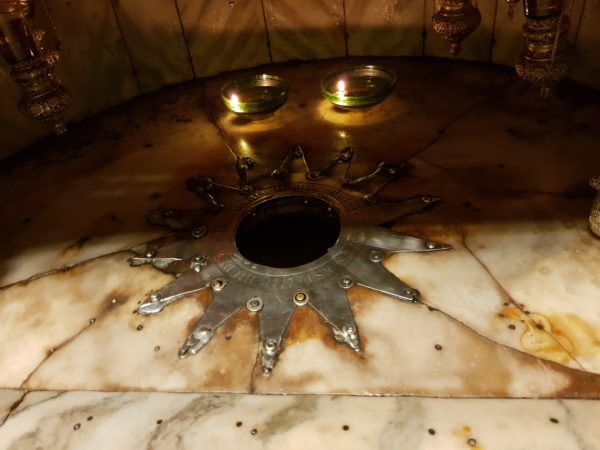
This is the grotto in the Church of the Nativity in Bethlehem, where Jesus was supposedly born. We waited over an hour (in peak tourist/pilgrim season, it can take 3-4 hours, per our guide) in a packed, enclosed church to descend into this cave, and the number of people who threw themselves at this rock, weeping or posing for a selfie, was…something.
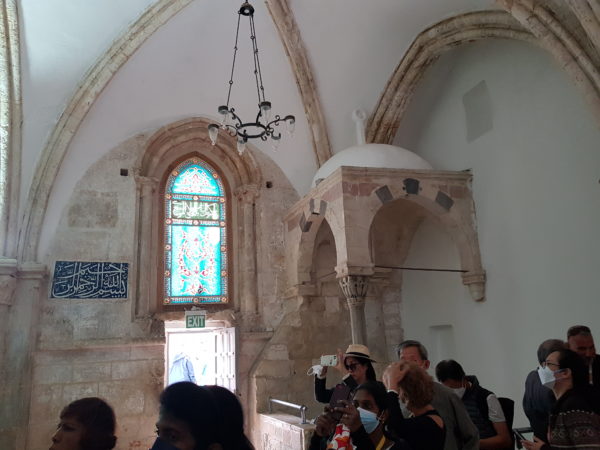
We also saw the Upper Room, site of the Last Supper and where Jesus later appeared to His disciples after His resurrection and where Pentecost happened.
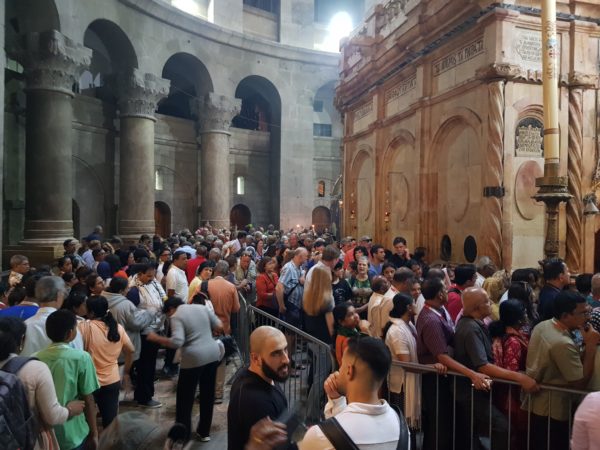
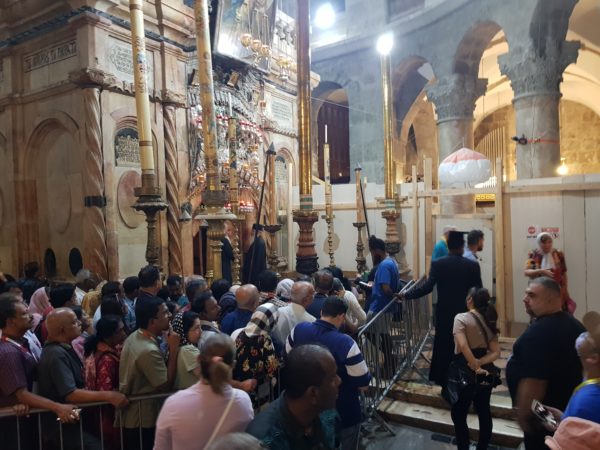
There are two main sites believed to be where Jesus was crucified and buried. The traditional site is where the Catholics and Orthodox churches believe it happened, in what is now the church of the Holy Sepulchre (a word I had to look up, so why should you be spared? Okay, fine, it means tomb). It is at the end of the Via Dolorosa, the presumed processional route through the streets of Old Jerusalem that Jesus would have walked, beaten and bleeding, carrying His cross. We did not enter the tomb, because, well, see for yourself.
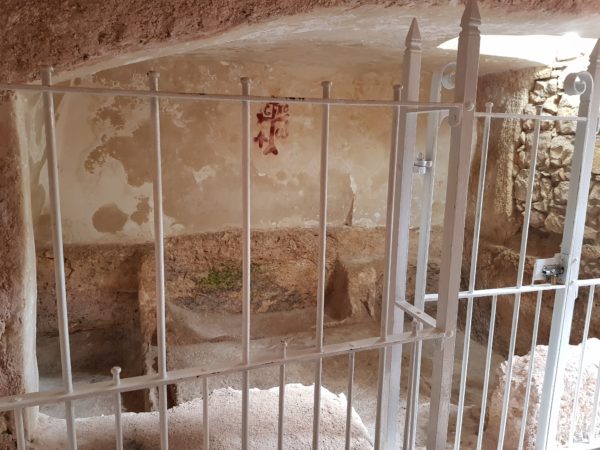
Some Protestants believe that Jesus was crucified and buried near what is now the Garden Tomb. It is a much nicer place to sit and reflect, but it was also found much later in the 19th century (compared to the church of the Holy Sepulchre which was built in the 4th century). We had a Holy Communion service here, and did actually see an empty tomb.
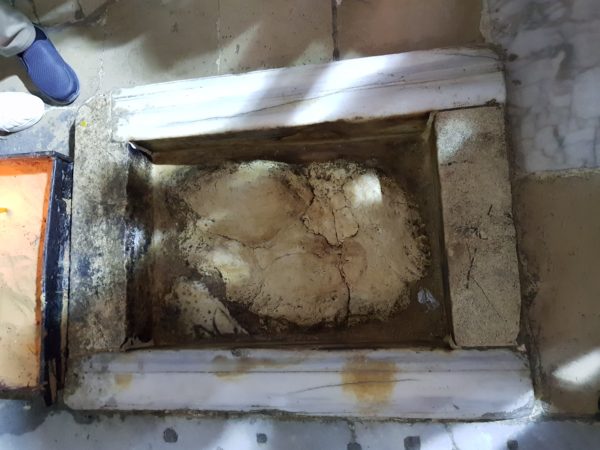
Here is a rock in the chapel on the Mount of Ascension, where Jesus ascended into heaven after promising His disciples the Holy Spirit. If you look carefully and employ a touch of pareidolia, you might see the imprint of Jesus’s foot in the middle of this rock – the heel on the left, widening to toes pointing right.
Some other places that we visited that I didn’t include photos of were Abu Serga in Egypt, where Joseph, Mary and Jesus sat out Herod’s insane infanticide spree; the Jordan river area, where Jesus was supposed to have been baptised; the Mount of Temptation, where Jesus was tempted by Satan; the Mount of Transfiguration; where God scared the crap out of Peter, James, and John; Cana, where Jesus turned water into wine (of course we tried some wine – it was okay); the tomb of Lazarus, out of which Jesus called him; the church at Gethsamane, where there is a rock on which it is believed Jesus knelt to ask that this cup be taken away from him; and Church of the Primacy of Peter, where Jesus reinstated Peter.
What I learned was how many of these places so sacred to Jews and Christians are controlled by Muslims. Bethlehem is a Palestinian city. Nazareth’s population is mostly Muslim. Mount Zion, on which the first two Jewish temples were built, is now home to the Dome of the Rock and al-Aqsa Mosque, under Jordanian control. Jordan also has control of parts of the Mount of Olives, including the afore-mentioned chapel on the Mount of Ascension. Even the keys to the church of the Holy Sepulchre are held by Muslims, who daily unlock and lock the church doors. The politics of all this are worth discussing further, but not here and certainly not today, as Covid grogginess starts to set in.
You might remember in my previous post I said that I had a must-see list of five items, and in that post I named four of them: Petra, the Dead Sea, the Sea of Galilee, and the pyramids/Sphinx. The last one was the traditional Via Dolorosa, tracing the path towards Jesus’s ultimate sacrifice. But it was so congested and convoluted that most of my attention was focused on not getting lost, rather than reflecting on what Jesus endured. There will be time for that now that I’m home.
But two things did make an impression on me while I was on the trip. First was the view from the Mount of Olives, from which you can see Mount Zion, where Solomon built the first temple. It’s no pyramid or Petra but it’s quite a sight (there’s a photo in the previous post.) I was reminded of Isaiah’s vision where “the train of [the Lord’s] robe filled the temple” and I got a sense of the scale of what he was trying to describe. Isaiah 6:1-8 is my favourite passage in the Bible, so getting any further insight into it is always going to be meaningful.
Second, as previously mentioned, was the boat ride on the Sea of Galilee. It was just our group on the boat, so the boat operators played Negaraku and hoisted the Jalur Gemilang. It says something that they had both those things at the ready despite the Malaysian passport not being valid in Israel, and we were specifically warned against posting photos online. After a brief prayer, there was no further historical or biblical exegesis. I stayed away from the boat operators selling souvenirs, although I did appreciate them playing upbeat worship music to set the mood. The weather was great and the waters were calm, so it was a nice respite from all the hectic rushing around, and a good way to wrap up our time in the Holy Land before we set off for Egypt.